


Using plasma proteomics to understand Alzheimer’s and other brain diseases
Using plasma proteomics to understand Alzheimer’s and other brain diseases
The plasma proteome presents a goldmine of information that can be used to develop diagnostic tests and identify novel drug targets. In this webinar, our expert speaker Dr. Keenan Walker describes his research into understanding the proteins, protein networks and biological pathways involved in age-related neurodegenerative diseases and vascular cognitive impairment.
Dr. Walker discusses how he integrates proteomic, genetic, brain imaging and cerebrospinal fluid biomarkers from initially cognitively normal individuals who later develop dementia, in order to discover novel blood-based biomarkers and mechanistically relevant proteins for therapeutic target prioritization.
Learn about:
- Proteins most strongly implicated in dementia risk
- How combining proteomics with neuroimaging to provide new insights into cerebral small vessel disease
- The process of nominating potentially casual proteins and genetically validating biomarkers

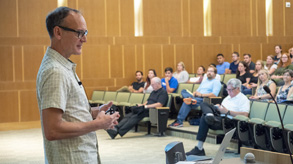
Keenan Walker, PhD
Chief, Multimodal Imaging of Neurodegenerative Disease (MIND)
National Institute on Aging
Keenan Walker, PhD, is an investigator at the National Institute on Aging Intramural Research Program and Chief of the Multimodal Imaging of Neurodegenerative Disease (MIND) unit. Dr. Walker’s current research program focuses on understanding the role of abnormal immune function in Alzheimer’s disease and late-life cognitive decline.
Using plasma proteomics to understand Alzheimer’s and other brain diseases
A presentation by Keenan Walker, PhD

More webinars
WebinarOpening the black box: Building and evaluating machine learning models for proteomics
Machine learning can be a powerful way to extract multivariate signals from high-dimensional proteomics data, but only when models are built and evaluated with rigor. In this on-demand webinar, explore a practical framework for developing predictive and explanatory models, with an emphasis on study design choices that help prevent data leakage, reduce overfitting, and improve reproducibility.
WebinarBeyond the trees: See the bigger biological picture with pathway enrichment analysis
Proteomic data holds enormous potential—but the biology is rarely contained in a single protein. When you’re handed a list of differentially abundant proteins, the next challenge is turning that list into a clear, testable story about mechanisms and processes.
WebinarFinding the signal: Identifying reproducible biomarkers in high-plex proteomics
In biomarker discovery, the challenge is rarely a lack of data. Rather, it is knowing how to separate meaningful biological signal from technical distraction. This webinar focuses on how to use univariate analysis as a practical and powerful entry point for biomarker discovery in high-plex proteomics studies.