



Millions for Proteomics Research in the Peer Reviewed Medical Research Program
Millions for Proteomics Research in the Peer Reviewed Medical Research Program
How SomaLogic technologies can give your research programs an edge.
Topics Covered
- Overview of the Peer Reviewed Medical Research Program (PRMRP) and Congressionally Directed Medical Research Programs (CDMRP)
- Overview of SomaLogic technologies that can give your research programs an edge
- How the PRMRP application process is unique to other U.S. government grant programs
- “Best Practices” for a successful PRMRP application

Tammy Hicks
Tammy Hicks is the Associate Director for the Southeast U.S. for SomaLoigic and has over 24 years of experience leading, mentoring, and selling in the Life Sciences market. She has supported many sectors, including academic research centers, pharmaceutical companies, and diagnostic testing providers. Tammy’s understanding of research and how to translate research findings into practical, actionable information for patients and physicians alike has allowed her to assist with many projects that improve health outcomes and deepen our understanding of human biology.

Elizabeth Barrows
Elizabeth “Liz” Barrows is a federal funding consultant whose clients have secured in excess of $100M over the course of her 10+-year career. Liz’s in-depth knowledge of the Department of Defense (DoD) funding opportunities and needs has a basis in experience at the DoD, where she managed pharmaceutical research and development projects in, and reviewed proposals for, blood products, resuscitation fluids and analgesic drugs for the U.S. Army from 2004-2009. She has also worked with NASA and private industry on the development of biomedical sensors, robotics, in vitro diagnostics, and blood products. She holds a master’s degree in biomedical engineering.
Millions for Proteomics Research in the Peer Reviewed Medical Research Program
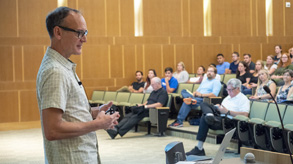
A presentation by Tammy Hicks and Elizabeth Barrows

More webinars
WebinarOpening the black box: Building and evaluating machine learning models for proteomics
Machine learning can be a powerful way to extract multivariate signals from high-dimensional proteomics data, but only when models are built and evaluated with rigor. In this on-demand webinar, explore a practical framework for developing predictive and explanatory models, with an emphasis on study design choices that help prevent data leakage, reduce overfitting, and improve reproducibility.
WebinarBeyond the trees: See the bigger biological picture with pathway enrichment analysis
Proteomic data holds enormous potential—but the biology is rarely contained in a single protein. When you’re handed a list of differentially abundant proteins, the next challenge is turning that list into a clear, testable story about mechanisms and processes.
WebinarFinding the signal: Identifying reproducible biomarkers in high-plex proteomics
In biomarker discovery, the challenge is rarely a lack of data. Rather, it is knowing how to separate meaningful biological signal from technical distraction. This webinar focuses on how to use univariate analysis as a practical and powerful entry point for biomarker discovery in high-plex proteomics studies.