
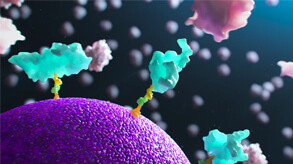



Are you seeing the full biology in your plasma samples?
Understanding the plasma proteome
Plasma proteomics, the large-scale study of proteins circulating the blood, offers a powerful window into human biology. These insights can help prioritize new strategies for diagnosis, monitoring, and treatment.
Advances in proteome profiling now enable researchers to measure thousands of proteins and immune markers from small plasma volumes, revealing new disease-associated protein signatures and molecular mechanisms underlying human health and disease.
In the sections below, we explore plasma’s biological complexity, what different proteomic signals can reveal, and how complementary technologies work alongside existing workflows.
Plasma is biologically complex
The plasma proteome presents unique analytical challenges, where important biological signals can remain difficult to measure consistently across sites.

Dynamic range
Plasma proteins span over 10 orders of magnitude, with 20 abundant proteins comprising 99% of the total protein mass, making it difficult to measure low-abundance disease markers.
Diverse protein functions
The plasma proteome is a rich but complex biological landscape to explore, reflecting system-wide physiological changes.
Methods and applications in plasma proteomics
Different proteomics approaches reveal distinct biological layers, helping researchers see more of the biology present in plasma.
- Mass spectrometry for broad, hypothesis-free protein identification and quantification.
- Affinity-based protein profiling, including immunoassays, antibody-based assays for measuring hundreds to thousands of predefined proteins
Evidence across large plasma studies
Current landscape of plasma proteomics from technical innovations to biological insights and biomarker discovery
Translational and Clinical Research, Biomarker Discovery
A standardized framework for circulating blood proteomics
Translational and Clinical Research, Biomarker Discovery
Comparative studies of 2168 plasma proteins measured by two affinity-based platforms in 4000 Chinese adults
Biomarker Discovery
Plasma proteomics links brain and immune system aging with healthspan and longevity
Biomarker Discovery
The Global Neurodegeneration Proteomics Consortium: biomarker and drug target discovery for common neurodegenerative diseases and aging
Biomarker Discovery, Translational and Clinical Research
European and African ancestry-specific plasma protein-QTL and metabolite-QTL analyses identify ancestry-specific T2D effector proteins and metabolites
Biomarker Discovery
Temporal dynamics of the plasma proteomic landscape reveals maladaptation in ME/CFS following exertion
Biomarker Discovery, Translational and Clinical Research
Dual-platform affinity proteomics identifies links between the recurrence of ovarian carcinoma and proteins released into the tumor microenvironment
Translational and Clinical Research
Seroconversion stages COVID19 into distinct pathophysiological states
Translational and Clinical Research
A Combined Proteomics and Mendelian Randomization Approach to Investigate the Effects of Aspirin-Targeted Proteins on Colorectal Cancer
Translational and Clinical Research, Drug Discovery
A Phase 1, Double-Blind, Placebo-Controlled Trial of Sevasemten (EDG-5506), a Selective Modulator of Fast Skeletal Muscle Contraction, in Healthy Volunteers and Adults With Becker Muscular Dystrophy
Translational and Clinical Research, Biomarker Discovery
Shared and disease-specific pathways in frontotemporal dementia and Alzheimer’s and Parkinson’s diseases
Biomarker Discovery, Translational and Clinical Research
Clinical Proteomics in Cardiovascular Medicine: Current Capabilities, Limitations, and Future Directions
Biomarker Discovery
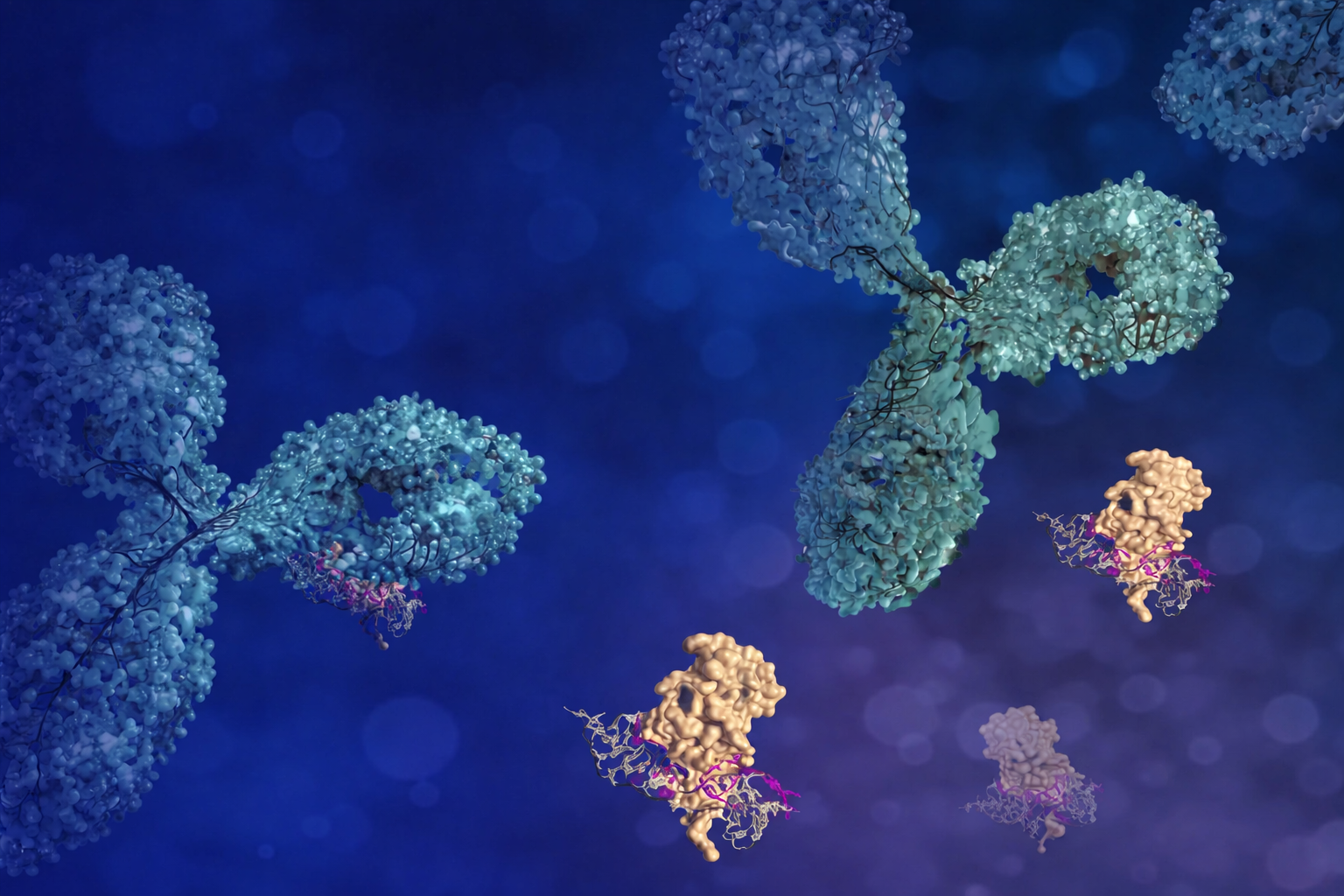
Approaches to studying the plasma proteome
Affinity-based proteomics depends on selective binding reagents like modified aptamers and antibodies. The differences between them influence performance, coverage, and the insights researchers can gain.
Core insights from plasma proteomics
Biomarker Discovery
Changes in plasma protein levels can serve as biomarker candidates for disease detection, treatment response, and health monitoring across clinical and translational research.
Why plasma is used for biomarker discovery
Human Proteome Complexity
Plasma contains thousands of proteins across an extreme dynamic range, and many biologically important signals may remain difficult to access consistently in standard analyses.
Why plasma proteomics is so challenging
Hidden Immune Signals
Antibodies represent a major and often underexplored component of the plasma proteome, providing unique insight into immune responses, disease progression, and treatment effects.
Antibodies: the hidden 20% of the plasma proteome
Plasma proteomics in disease research
Plasma proteome profiling in widely used across research areas including cardiovascular disease, neurodegenerative disorders, oncology, immunology, and metabolic disease. By measuring protein-level changes and antibody signatures, researchers can identify biomarker candidates, study disease biology, and monitor therapeutic response across clinical and translational studies.
Get more out of your plasma samples
Different proteomics technologies provide complementary insight into plasma biology. Mass spectrometry supports hypothesis-free discovery, while high-plex affinity-based protein profiling enables consistent measurement of thousands of predefined proteins across large study cohorts.
Together, these approaches can help researchers explore additional layers of plasma biology and increase proteome depth for more comprehensive biomarker discovery and mechanistic insight.
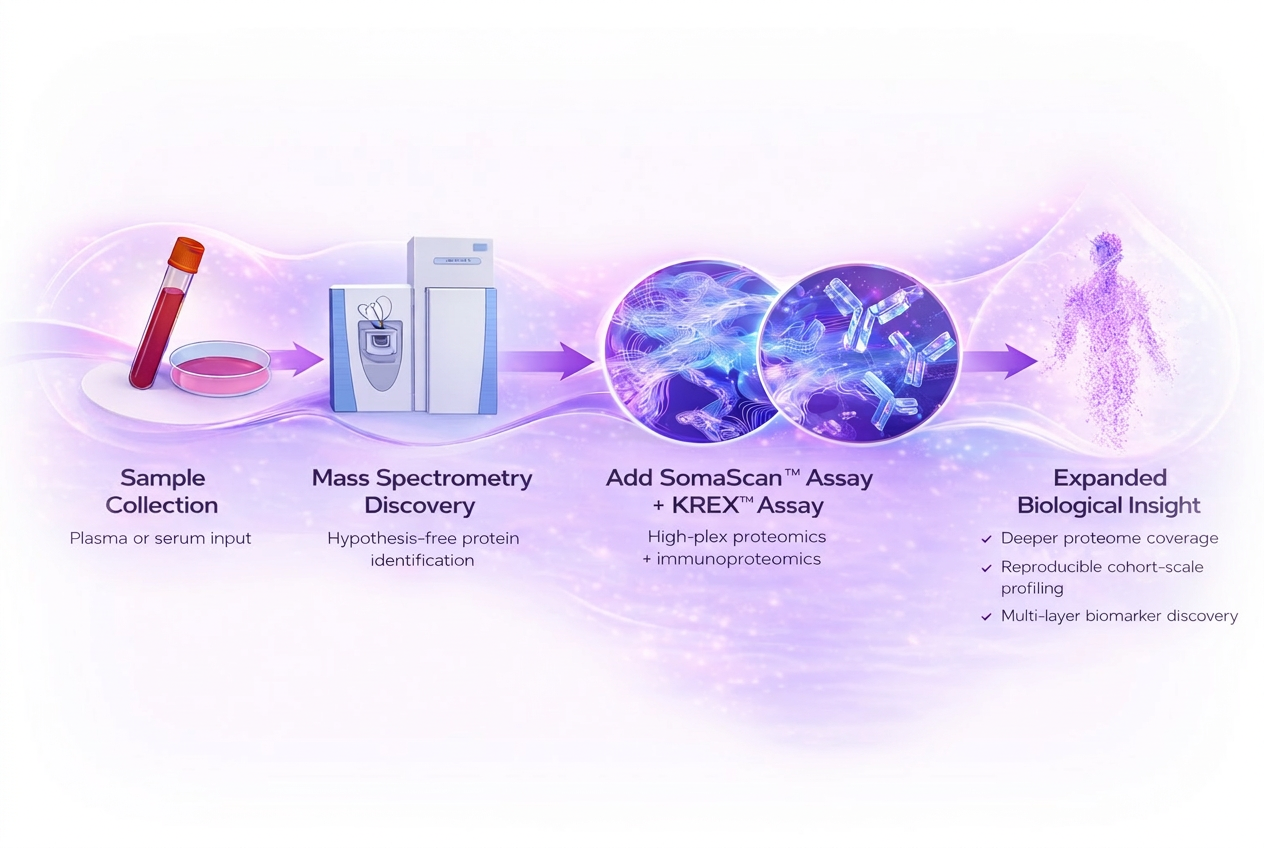
Designed to work alongside existing workflows
Mass spectrometry is a powerful discovery tool, but plasma proteomics requires balancing sample throughput with broad proteome coverage due to instrument and biological constraints. By adding plasma protein and antibody profiling approaches that complement mass spectrometry workflows, you can:
- Capture a wide range of proteins, from low- to high-abundance, across large cohorts
- Strengthen confidence in biomarker discoveries
- Gain deeper insight from existing plasma datasets
- Patterns of wellness and aging
- Explore antibody and immune-response signatures linked to disease biology
Affinity-based protein and antibody profiling platforms like the SomaScan 11K Assay and KREX Assay, respectively, are designed to fit alongside existing mass spectrometry workflows and study designs — without depletion, enrichment, or fractionation. Explore how expanded plasma proteomics fits into your workflow.
Start your plasma proteomics study
Evidence across large plasma studies
A proteomic tool to separate clinical signals from a sea of noise
Profiling technology unlocks the predictive power of proteomics
Independent study validates the SomaScan Assay as the most precise and comprehensive plasma proteomic platform
Frequently asked questions
What is plasma proteomics?
Why is plasma used for biomarker discovery?
What makes plasma difficult to study?
What methods are used in plasma proteomics?
· Mass spectrometry-based analysis for protein identification and discovery
· Affinity-based protein profiling technologies for large-scale quantitative studies
· Low-plex immunoassays like ELISA for targeted measurement of specific biomarkers
Each method provides different types of information and can be used together to better understand disease biology.
Why is plasma useful for longitudinal studies?
FAQ References
2. Geyer PE et al. “Plasma Proteome Profiling to Assess Human Health and Disease.” Cell Systems vol. 2, 3 (2016): 185-195. doi: 10.1016/j.cels.2016.02.015