
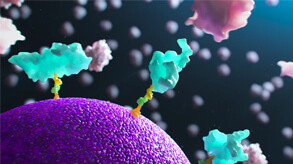



Antibodies: The Hidden 20% of the Plasma Proteome
Antibodies are best known for defending the body against pathogens, but they also represent a large and underexplored component of the plasma proteome. By capturing antibody specificities, antibody profiling reveals how the immune system responds to abnormal molecular changes, information that cannot be captured by protein abundance measurements alone.
The remarkable diversity of antibodies
A healthy adult has an estimated 10 million distinct antibody sequences circulating in plasma1. These molecules are exquisitely tuned to recognize specific proteins or molecules – called antigens – through their unique shape and chemical complementarity. This incredible diversity is how the immune system tracks and responds to an enormous range of biological states, such as infection, injury, inflammation and even cancer.
Autoantibodies as early disease biomarkers
In some diseases, the immune system flags the body’s own proteins as threats, producing autoantibodies2. These immune responses can emerge months or even years before clinical symptoms, making them powerful tools for early detection3-6.
For example, in Type 1 diabetes, autoantibodies targeting insulin-producing pancreatic beta cells can be detected months or even years before diagnosis7. This pre-symptomatic window creates opportunities for earlier intervention and improved outcomes.
Why autoantibodies reflect pathology
Importantly, autoantibodies are not produced at random2,6,8,9. They often arise through a limited set of biological mechanisms that are closely linked to pathological processes, rather than normal healthy states. Autoantibody production is triggered when self-proteins change in ways that trigger immune recognition, such as:
- Rapid or abnormal changes in protein abundance
- Genetic mutations or abnormal RNA processing
- Proteins appearing outside their normal cellular location
- Aberrant post-translational modifications
- Protein misfolding or aggregation
- Abnormal proteolytic activity
Because these events are tightly linked to pathology, the antibodies generated against them are often highly disease relevant.
Why are antibodies important biomarkers?
Antibodies are uniquely powerful biomarkers because they are:
- Specific: Reflect immune recognition of abnormal proteins
- Early: Appear before symptoms
- Stable: Persist over time
- Predictive: Correlate with disease risk and outcomes
- Accessible: Measurable in peripheral blood
- System-wide: Capture signals across tissues
By profiling antibodies, researchers gain insight into which molecular changes the immune system flags as biologically meaningful10. This immune-informed perspective enhances disease detection and risk prediction, while highlighting immunogenic protein targets that may be biologically relevant for therapeutic research (Vincent, Gout, Shi, Runbeck, Patel).
Why “hidden”?
Antibodies (or immunoglobulins) make up about 20% of the plasma proteome, yet they’re often overlooked in proteomics studies (Figure 1)11. That’s because mass spectrometry – one of the most widely used tools in proteomics – cannot measure antibody specificity at high throughput12,13. In other words, it can tell you how much antibody is present, but not what it’s binding to.
That’s a missed opportunity.
Protein microarrays address this gap by enabling high-throughput analysis of antibody specificity. For instance, the KREX™ i-Ome™ Discovery platform profiles antibody binding against thousands of full-length, correctly folded human proteins.
Why antibody profiling complements protein profiling
Antibody and protein profiling offer two perspectives on the same biological story:
| Antibody Profiling | Protein Profiling |
| Measures antibodies (a subset of the immuno-proteome) | Measures the broader proteome |
| Identifies proteins flagged by the immune system as abnormal, often due to structural or functional aberrations | Identifies differentially expressed proteins |
| Reveals how the immune system responds to pathological processes | Reveals how gene expression maps to protein function |
Combining both approaches enables deeper biomarker discovery, stronger target validation and a more complete understanding of disease biology.
Why antibody profiling matters
Incorporating antibody profiling into plasma proteomics research provides a richer, more complete view of health and disease by revealing biologically significant and immunologically relevant protein antigens. Beyond detection, this immune-centric perspective can inform drug and vaccine development by identifying biomarkers associated with protection or pathology, and by revealing early indicators of efficacy or safety14-19.
References
Anderson, N.L et al. “The human plasma proteome: history, character, and diagnostic prospects.” Molecular & cellular proteomics : MCP vol. 1,11 (2002): 845-67.
2. Elkon, K. et al. “Nature and functions of autoantibodies.” Nature clinical practice. Rheumatology vol. 4,9 (2008): 491-8.
3. Li, Y. et al. “p53 autoantibodies predict subsequent development of cancer.” International journal of cancer vol. 114,1 (2005): 157-60.
4. Zhong, L. et al. “Profiling tumor-associated antibodies for early detection of non-small cell lung cancer.” Journal of thoracic oncology : official publication of the International Association for the Study of Lung Cancer vol. 1,6 (2006): 513-9.
5. Rosen, L.B. et al. “Nocardia-induced granulocyte macrophage colony-stimulating factor is neutralized by autoantibodies in disseminated/extrapulmonary nocardiosis.” Clinical infectious diseases : an official publication of the Infectious Diseases Society of America vol. 60,7 (2015): 1017-25.
6. Rantapää-Dahlqvist, S. et al. “Antibodies against cyclic citrullinated peptide and IgA rheumatoid factor predict the development of rheumatoid arthritis.” Arthritis and rheumatism vol. 48,10 (2003): 2741-9.
7. Diaz Lozano, I.M. et al. “Proteome profiling of whole plasma and plasma-derived extracellular vesicles facilitates the detection of tissue biomarkers in the non-obese diabetic mouse.” Frontiers in endocrinology vol. 13 971313. 28 Sep. 2022.
8. De Genst, E. et al. “Antibodies and protein misfolding: From structural research tools to therapeutic strategies.” Biochimica et biophysica acta vol. 1844,11 (2014): 1907-1919.
9. Burbelo, P.D. et al. “Autoantibodies Targeting Intracellular and Extracellular Proteins in Autoimmunity.” Frontiers in immunology vol. 12 548469. 8 Mar. 2021.
10. Ng, W.K. et al. “The Power of Antibodies: Advancing Biomarker-Based Disease Detection and Surveillance.” Immunological investigations vol. 54,6 (2025): 770-794.
11. Jaros, J.A.J. et al. “Affinity depletion of plasma and serum for mass spectrometry-based proteome analysis.” Methods in molecular biology (Clifton, N.J.) vol. 1002 (2013): 1-11.
12. Vimer, S. et al. “Direct-MS analysis of antibody-antigen complexes.” Proteomics vol. 21,21-22 (2021): e2000300.
13. Di Ianni, A. et al. “Leveraging Cross-Linking Mass Spectrometry for Modeling Antibody-Antigen Complexes.” Journal of proteome research vol. 23,3 (2024): 1049-1061.
14. Vincent, T. et al. “Emerging clinical phenotypes associated with anti-cytokine autoantibodies.” Autoimmunity Reviews 14 (2015): 528–535.
15. Gout, D.Y. et al. “The present and future of immunocytokines for cancer treatment.” Cellular and Molecular Life Sciences 79 (2022): 509. 13.
16. Shi, W. et al. “Advancements and challenges in immunocytokines: A new arsenal against cancer.” Acta Pharmaceutica Sinica B 14 (2024): 4,649–4,664. 14.
17. Runbeck, E. et al. “Utilizing immunocytokines for cancer therapy.” Antibodies 10 (2021): 10
18. Patel, A.J. et al. “A highly predictive autoantibody-based biomarker panel for prognosis in early-stage NSCLC with potential therapeutic implications.” British Journal of Cancer 2 (2022): 238–246.
19. Shemesh, C.S. et al. “Personalized Cancer Vaccines: Clinical Landscape, Challenges, and Opportunities.” Molecular therapy : the journal of the American Society of Gene Therapy vol. 29,2 (2021): 555-570.

More blogs
BlogHigh-Plex Affinity Proteomics for Plasma
High-plex affinity proteomics enables deep, reproducible plasma biomarker discovery. See how the SomaScan 11K Assay delivers scale, sensitivity, and coverage.
BlogKey Challenges in Plasma Proteomics for Biomarker Discovery Research
Why is protein biomarker discovery in plasma so difficult? Explore how protein complexity and dynamic range limit detection of low-abundance signals.
BlogPlasma Proteomics 101: Why It’s Central to Biomarker Discovery
Plasma proteomics is central to biomarker discovery. Understand the plasma proteome, its complexity, and how blood proteins reveal health and disease.